Bedding · Seasonal comfort
Comforter Layering for Homes with Wide Seasonal Swings
A bedroom does not have to be rebuilt every time the weather changes. With a flexible base layer, a removable blanket, and a little attention to fabric and fill, one bedding arrangement can adapt to cold nights, warm spells, and the uncertain stretches in between.
Published October 19, 2026
In places where the seasons arrive with conviction, comfort can be a moving target. A night that calls for an extra layer may be followed by an afternoon warm enough to leave the windows open. Indoors, heating and air-conditioning add another variable: the temperature under the covers may differ markedly from the temperature on the porch. In Oklahoma and other regions with broad seasonal swings, bedding works best when it can change in small, manageable steps.
That is the promise of comforter layering. Rather than relying on one very heavy comforter throughout the year, sleepers can build a simple system around a lighter primary layer and add or remove a blanket as conditions shift. The idea is practical, but it is also tactile: a breathable sheet, a softly insulating comforter, perhaps a woven blanket at the foot of the bed. Each layer has a job, and together they create a little more control over nighttime warmth.
There is no universal formula. A warm sleeper in a well-insulated home may need less bedding than someone who feels cold easily in a drafty room. The right arrangement depends on the room, the sleeper, the materials, and the way those elements interact. Understanding weight, fill, construction, and care makes it easier to adjust without accumulating a closet full of bulky bedding.
Start with the room, not the calendar
Seasonal bedding decisions are often made by date: put away the winter comforter in spring, bring it back in autumn. Yet the calendar is only a rough guide. A cold front, a warm spell, a change in household heating, or a room that catches afternoon sun can alter sleep conditions well before the season officially turns.
Begin by noticing what happens in the bedroom overnight. Does the room cool steadily after sunset? Does heating make the air feel dry and warm? Does the bed sit beside a drafty window or against an exterior wall? A brief note about whether you wake feeling overheated, chilly, or comfortable can reveal a more useful pattern than a forecast alone.
Also account for personal differences. Two people sharing a bed may have different temperature preferences, and one person’s comfort can change over time. If partners disagree, separate blankets can be a simple solution: each person can choose a suitable layer without repeatedly pulling a shared comforter in opposite directions.
Think of the bedroom as a small environment rather than a single number on a thermostat. Bedding, mattress, pajamas, room airflow, and humidity all contribute to how warm a sleeper feels. Adjusting one layer at a time helps identify what is making the greatest difference.
What lightweight, midweight, and heavy comforters do
Comforter labels such as “lightweight” or “midweight” offer a useful starting point, but they do not always describe warmth in exactly the same way across brands or materials. Fill amount, fill characteristics, shell fabric, stitching, and overall dimensions all influence how a comforter performs. Treat the label as a guide, then consider how the construction and your own sleep habits fit together.
Lightweight: an adaptable starting layer
A lightweight comforter is often the most flexible choice for a room that does not become extremely cold, for warm sleepers, or for use beneath an additional blanket. It can provide a familiar sense of coverage without the substantial insulation of a winter-weight layer. During warmer months, it may be enough on its own; when temperatures fall, it can serve as the base of a layered setup.
Lightness does not necessarily mean poor warmth or low quality. It describes the overall feel and insulation level, which depend on the amount and type of fill as well as its loft. A lofty, efficient fill can feel airy while still holding warmth. Conversely, a densely constructed comforter may feel heavier without being the best match for someone who runs warm.
Midweight: a useful bridge
Midweight comforters occupy the broad middle ground. They can suit cool rooms and transitional weather, especially when a lightweight layer alone feels insufficient but a heavy comforter would be too much. For many households, a midweight option is the dependable center of a seasonal bedding system.
Its usefulness depends on the range of temperatures in the bedroom. In a house with efficient heating, a midweight comforter may work across much of the year. In a room that becomes very cold, it may need a blanket underneath or above it. A sleeper who generates a lot of warmth may prefer a lighter base, even in winter, and add a blanket only on especially cold nights.
Heavier comforters: concentrated warmth
A heavier comforter can be reassuring in a cold room, particularly for someone who prefers a substantial, enveloping feel. But maximum weight is not automatically the best route to comfort. Too much insulation may lead to overheating, restless adjustments, or a bedding arrangement that is difficult to use during changing weather.
Heavy bedding can also take longer to dry and may require more careful handling, depending on the materials and care instructions. For a household with sharp temperature fluctuations, a moderate comforter plus a removable blanket can offer finer control than a single very heavy layer.
Fill and construction shape the feel
The word “comforter” describes a form, not a single material. Down, down alternatives, wool, cotton, and other fills differ in loft, weight, breathability, resilience, and care needs. No fill is ideal for every sleeper or every household. The most useful comparison is not simply natural versus synthetic, but how a particular comforter’s materials and construction suit the way it will be used.
Down clusters create loft by trapping pockets of air, offering warmth with relatively little weight. Fill power is one measure of loft—the space occupied by a given weight of down—but it is not a complete warmth rating by itself. Fill weight and construction matter as well. A lofty comforter with a modest fill amount may not feel as warm as a denser one, and a high fill-power label alone cannot tell you whether the warmth level suits your room.
Alternative fills vary widely. Some are designed to imitate the loft and softness of down; others have a more even or structured feel. They may be appealing to people who prefer not to use animal-derived fill or who want a different care routine. Check the product’s specific instructions rather than assuming all synthetic comforters can be washed in the same way.
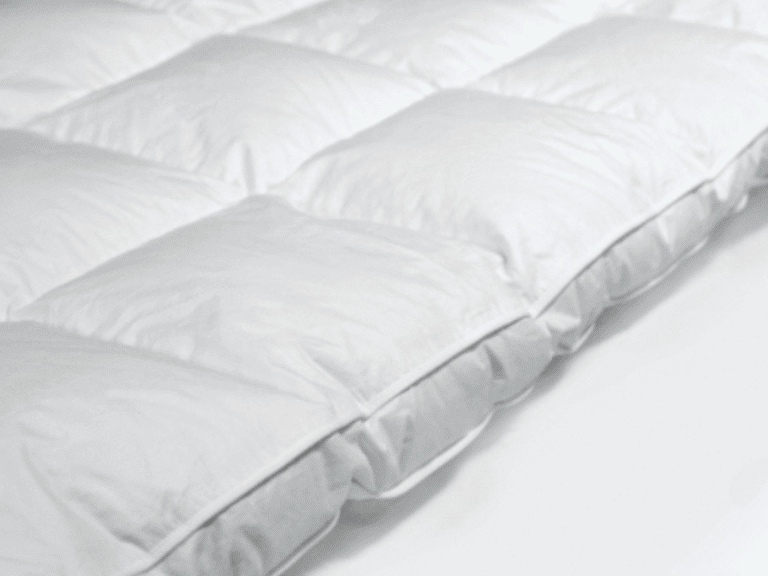
Construction determines how evenly the fill stays in place. Sewn-through patterns join the top and bottom shell at intervals, creating compartments that can reduce shifting but may make the stitched areas less insulated than the filled sections. Baffle-box construction uses fabric walls between the shell layers to create three-dimensional chambers, helping the fill maintain loft and distribute more evenly. Neither design is automatically best for every use; the right choice depends on warmth, feel, and budget.
Shell fabric matters, too. A tightly woven cotton shell can help contain fine fill and offer a smooth hand, while other fabrics may feel cooler, softer, or more textured. A breathable-feeling cover does not guarantee that a sleeper will never overheat, but the complete system—including sleepwear, sheets, room conditions, and insulation—can influence comfort.
Build a simple system in layers
A practical approach begins with a lighter comforter used as the main layer. Add a removable blanket when the room turns cooler, then take it off when the weather warms. This arrangement avoids making a permanent seasonal change every time temperatures fluctuate. It also lets sleepers adjust the bed at night without replacing the main comforter.
- Keep the sheet as the first layer. The sheet provides a familiar surface against the skin and can contribute to the overall feel of the bed. Fabric, weave, and season all matter; a crisp cotton percale feels different from a smooth sateen or a brushed fabric.
- Choose a versatile base comforter. Consider a lightweight or midweight option that suits the room for much of the year. Think about whether you prefer lofty softness, a flatter profile, or a more substantial feel.
- Add one removable blanket. A blanket provides an adjustable increment of warmth. Keep it folded at the foot of the bed or spread over the comforter when needed. A single well-chosen layer is often easier to manage than several thin layers that bunch or slide.
- Adjust one variable at a time. If the bed feels too warm, remove the blanket before changing the comforter. If it feels too cool, try adding the blanket or checking for a draft. Small adjustments make it easier to understand what works.
- Reassess after a few nights. A new arrangement may feel different from the familiar one. Notice whether you wake comfortable, whether the layers stay in place, and whether the comforter is easy to handle.
Layer order can be a matter of preference. Some people place a blanket beneath the comforter; others prefer it on top, where it can be removed quickly. A blanket used as the outer layer may shift more readily, while one beneath the comforter may feel more integrated. Try both arrangements and pay attention to warmth, texture, and ease of movement.
For shared beds, flexible layers can help accommodate different needs. A blanket placed over only one side may work, though it can bunch at the center. Two smaller blankets or separate top layers may be more practical for partners with contrasting temperature preferences. The best arrangement is the one that remains comfortable and manageable through the night.
Make the layers work with Oklahoma’s changing weather
Oklahoma’s weather can move between cold spells and warm intervals, while local homes differ in insulation, heating systems, exposure, and room layout. That variety makes a fixed, one-comforter-for-every-night strategy less reliable. A flexible bedding setup lets residents respond to the conditions inside the bedroom rather than trying to predict the entire season in advance.
In the colder part of the year, a blanket can add warmth without requiring a change to the base comforter. During a mild stretch, removing that layer may be all that is needed. When the room warms further, a lighter comforter or blanket alone can make the bed feel less insulated. The goal is not to create a separate ensemble for every month; it is to create a small set of pieces that can be rearranged.
Consider storage space as part of the plan. Bulky bedding needs a clean, dry place between seasons. A system built from a versatile comforter and one or two complementary layers can be easier to store than several specialized comforters. It may also reduce the number of times delicate or bulky items need to be laundered and handled.
Room conditions can sometimes be improved alongside bedding. Closing curtains at night may help reduce the sensation of a cold window, while safe, appropriate ventilation can help a room feel less stuffy. These measures do not replace adequate heating or address every building issue, but they can help distinguish a bedding problem from a room-comfort problem. If a room is persistently damp, drafty, or difficult to heat, investigate the underlying condition rather than relying only on additional layers.
Care labels are part of the comfort system
Comforters and blankets can last for years when handled according to their construction and care requirements. The care label is the best place to begin. It may specify machine washing, professional cleaning, spot treatment, or other restrictions. A comforter that is too large for a household washer can be damaged by an overloaded cycle or insufficient rinsing, so check capacity before washing it at home.
Use a removable duvet cover when appropriate. A cover can reduce the frequency with which the insert itself needs washing, while making routine cleaning simpler. It also provides an easy way to change color or texture without changing the comforter. Follow the cover’s laundering instructions, and make sure it is fully dry before returning it to the bed.
When a comforter is washable, use the method and settings specified by its maker. Avoid assuming that extra detergent or a high-heat cycle will produce a better result. Residue, excess heat, or aggressive treatment can affect fabric and fill. If a large item cannot move freely in the machine, a suitably sized commercial machine or professional cleaner may be a safer option, depending on the care label.
Drying deserves particular attention. Damp fill can clump and retain moisture, while incomplete drying can leave a musty smell. Allow enough time for the entire comforter to dry, following the care instructions and checking seams and thick areas. Do not put bedding away while it still feels damp or cool from retained moisture.
Store seasonal bedding clean, dry, and breathable
Before putting a comforter or blanket away, make sure it is clean and completely dry. Oils, dust, and moisture left in stored textiles can contribute to odors or damage over time. Even if an item appears fresh, follow its care guidance before long-term storage; routine airing is not a substitute for cleaning when cleaning is needed.
Choose a cool, dry storage location away from direct sunlight, leaks, and strong odors. Breathable fabric storage bags or clean cotton covers can help protect bedding while allowing some air movement. Avoid sealing a damp item in a plastic container. If a sealed container is the only practical option, the bedding must be thoroughly dry first, and the container should be kept in a dry environment.
Fold bedding loosely rather than compressing it under heavy objects for long periods. Excessive compression can flatten loft, especially in filled comforters. When bringing an item back into use, give it time to air out and regain its shape, following any specific care advice provided with the bedding.
Store blankets and comforters where they are easy to reach. A seasonal layer that is difficult to retrieve is less useful when a sudden cold night arrives. A clearly labeled shelf or breathable under-bed storage space can turn a bedding system into a practical routine rather than a once-a-year project.
A short checklist for choosing layers
- What temperature does the bedroom actually reach overnight, and how much does it vary?
- Do you tend to sleep warm, cool, or somewhere in between?
- Would a lightweight or midweight comforter serve as a useful base for most of the year?
- Does the fill match your preference for loft, weight, breathability, and care requirements?
- Does the construction help keep the fill distributed in a way that suits your needs?
- Can you add or remove a blanket without disturbing the entire bed?
- Is there a clean, dry place to store seasonal bedding?
- Have you checked the care label and confirmed that the item can be cleaned and dried appropriately?
These questions are more useful than chasing a single ideal comforter weight. They turn the decision into a practical assessment of your room, your habits, and the care you can provide.
Comfort is a balance, not a maximum
The most comfortable bed is not necessarily the warmest or the most elaborate. It is the one that lets a sleeper remain at ease without constant adjustments. In a home exposed to broad seasonal changes, the advantage of layering is control: a light base can stay in place while a blanket answers the cooler nights, then disappears when warmth returns.
Start with what the bedroom is telling you. Compare comforter weights carefully, look beyond labels to fill and construction, and make changes gradually. Wash and dry each layer according to its care instructions, then store it clean and protected when it is not in use. A few well-chosen bedding layers can make seasonal transitions feel less like a reset and more like a quiet adjustment—one fold, one blanket, and one cooler night at a time.