Bedding • Comfort • Care
Mattress Toppers Explained: Comparing Materials, Loft, and Care
A mattress topper is a relatively modest layer with the power to change how a bed feels. Its material, thickness, and construction can influence softness, pressure relief, airflow, and the work required to keep it clean. Understanding those differences helps you choose a topper that complements—not tries to replace—the mattress beneath it.
A small layer, a noticeable difference
A mattress is the foundation of a sleep surface; a topper is an adjustment. Usually placed directly on top of the mattress and beneath the fitted sheet, it adds a layer of cushioning or changes the surface feel. Some toppers soften a firm bed. Others add a little buoyancy, warmth, or a more substantial, cushioned sensation. The result depends on the topper’s material and design, but also on the condition and construction of the mattress below it.
That distinction matters. A topper can modify comfort, but it cannot reliably repair a mattress that sags, has broken support components, or no longer holds the body evenly. Think of it as a fine-tuning layer rather than a structural fix. If the mattress has developed a deep dip or feels unsupportive across broad areas, adding loft on top may disguise the problem briefly without addressing its cause.
For Oklahoma households, choices may also be shaped by the changing seasons and the home’s indoor conditions. A bedroom that feels cool in winter may be warm and humid during another part of the year. No material guarantees a particular temperature, but the composition, density, and cover of a topper can affect how warmth and moisture move near the body. It is worth considering the room as it is actually used, rather than choosing by a material label alone.
Start with the mattress you already have
Before comparing mattress topper materials, pause to identify what you want to change. Is the surface too firm at the shoulders or hips? Does it feel warm? Do you want a softer, more cushioned first impression, or a little more spring when you shift position? Clear observations make it easier to distinguish a useful adjustment from an unnecessary extra layer.
Spend a few nights noticing the conditions around the discomfort. A surface may feel different depending on sleep position, bedding layers, room temperature, or how long the mattress has been in use. Check whether the mattress is level and properly supported by its base. A topper placed over an uneven or unsuitable foundation can follow that unevenness rather than smooth it out.
Consider the mattress’s age and physical condition, too. If the bed has a visible hollow, loose or damaged components, or a persistent loss of support, a topper is unlikely to restore the original performance. If you are uncertain whether the issue is the mattress or the surface feel, review the mattress manufacturer’s guidance and any applicable warranty terms before adding a layer.
It can help to keep a simple comfort note: where pressure is felt, whether warmth becomes a concern, and how the bed feels when getting in and out. This isn’t a clinical assessment; it is a practical way to describe what you want to improve. The goal is not to find a universally “best” topper but to understand which features match the bed and your preferences.
Common mattress topper materials
Materials differ in how they compress, recover, retain warmth, and respond to movement. Even within one material family, density, formulation, thickness, quilting, and cover fabric can change the feel. Product descriptions are useful starting points, but they do not replace checking construction details and care instructions.
Memory foam
Memory foam is known for contouring under pressure. It compresses where weight is applied and may recover gradually when that pressure lifts. This close response can create a cushioned, cradling sensation, which some sleepers enjoy. Others may prefer a surface that feels less enveloping or changes shape more quickly as they move.
Foam density and formulation influence the experience, so “memory foam” alone does not tell you exactly how a topper will feel. Some designs are ventilated or paired with covers intended to support airflow, but such features do not make every foam topper cool in every bedroom. If temperature is a concern, look for specific construction details and consider the entire bedding system, including sheets, blankets, and room conditions.
Latex
Latex toppers generally offer a buoyant, responsive feel. Rather than sinking slowly into a deep impression, the surface may feel springier and push back more readily as the sleeper changes position. Latex products can be made in different ways and degrees of firmness, so compare the stated construction and feel rather than assuming all latex behaves alike.
Natural and synthetic latex are not interchangeable labels, and a product may use one type or a blend. Read material disclosures carefully, especially if you have sensitivities or are comparing environmental claims. Latex can be relatively substantial to lift and handle, depending on its size and thickness—an everyday consideration when changing sheets or moving bedding for care.
Polyurethane foam
Polyurethane foam covers a broad range of constructions. A topper in this category may feel relatively soft, firm, or springy, depending on its formulation and density. Because the term is broad, it offers less information about the precise experience than a detailed specification does. Check the product description for thickness, density if provided, and any stated information about ventilation or cover materials.
Like other foams, polyurethane foam should be used and maintained according to its maker’s instructions. Avoid assuming that all foam can be washed or exposed to water. In many designs, the foam core is not machine washable, and excess moisture can take a long time to dry.
Down, feather, and fiber fills
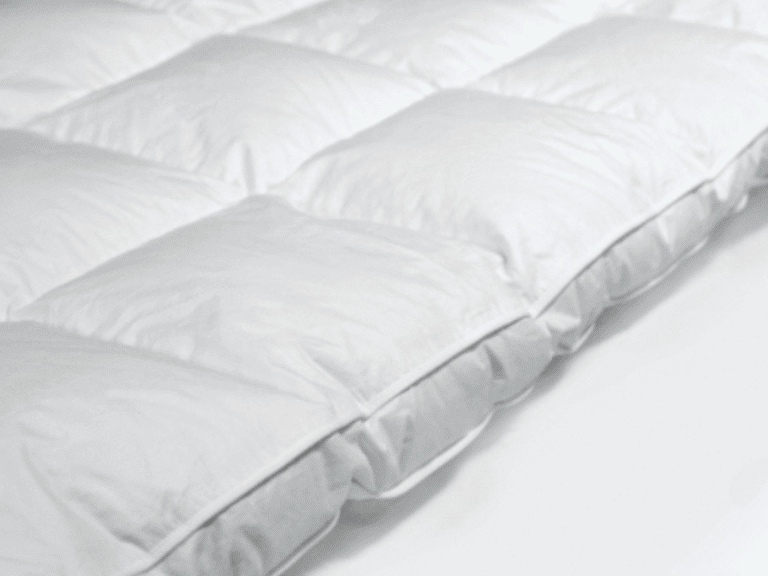
Filled toppers use soft materials inside a fabric shell, sometimes with stitched compartments that help limit shifting. Down and feather blends can feel plush and yielding, while synthetic fiber fills offer a different texture and may suit people looking for a non-down option. These layers often change the surface feel without providing the same close contouring as foam.
Fill can move or compress with use, and the shell’s construction influences how evenly the layer stays distributed. Look for clear information about fill composition, compartment design, and whether the cover can be removed. Allergy concerns vary from person to person; a label or material name is not a substitute for individual guidance from a qualified health professional.
Wool and other natural fibers
Wool and other natural fibers may be used in quilted or filled comfort layers. Their feel depends on how the fibers are processed, arranged, and enclosed. A natural fiber label alone does not determine whether a topper will feel cool, warm, firm, or plush. Check the full construction and care guidance, and consider how the layer will work with the sheets and blankets already on the bed.
Loft and density: what the numbers can—and cannot—tell you
Loft is the height or thickness of a topper. A lower-profile layer may make a subtle change, while a deeper one can create a more obvious cushion. Yet thickness is not a direct measure of softness, support, or quality. A dense, relatively thin layer may feel quite different from a taller, more compressible one. Material, construction, and how the topper responds under your body all matter.
Density is commonly discussed for foam. It describes the amount of material in a given volume, but it does not by itself determine firmness. Firmness and density are related to different aspects of a foam’s behavior: two products with similar density can feel different, while a higher-density foam is not automatically the right choice for every sleeper. Use specifications as comparison points, not as a complete prediction of comfort.
Loft also affects the practical fit of the bed. A thick topper raises the sleeping surface and can make a fitted sheet difficult to secure if the combined mattress-and-topper depth exceeds the sheet’s pocket capacity. Measure the mattress and topper together, then compare that total with the fitted-sheet dimensions. A sheet that is too shallow may pull loose; one with ample depth may fit more securely, depending on its design.
Keep mattress support in view as you assess thickness. More cushioning does not necessarily mean better alignment or more support. If a topper allows the body to sink in a way that feels uncomfortable, or creates an unstable surface, additional loft may not solve the problem. A balanced choice is one that changes the surface in a way you prefer while leaving the mattress to perform its supporting role.
Temperature, movement, and everyday comfort
Temperature is influenced by more than the topper. Room conditions, pajamas, sheets, blankets, body heat, and ventilation all contribute to how a bed feels overnight. Still, material and construction can alter the microclimate at the surface. A dense layer that closely follows the body may feel different from a more open or springy construction, and a thick filled topper may add insulation.
If overheating is a concern, compare the complete product details instead of relying on phrases such as “breathable” or “cooling” alone. Look for the material composition, whether the cover is removable, and how the maker describes airflow or heat management. These descriptions can help you compare products, but personal experience depends on the whole sleep environment.
Movement is another useful comparison. Some materials compress closely and recover slowly; others respond quickly when weight shifts. If you change positions often, a more responsive surface may feel easier to move across. If you prefer a more cradled sensation, a slower response may be welcome. Neither quality is inherently superior—the right choice depends on the feel you want and whether it remains comfortable through the night.
Care begins with the label
Care requirements can determine whether a mattress topper is convenient over the long term. Before buying, find out whether the entire topper can be washed, whether only its cover is removable, and which cleaning methods are allowed. Many foam cores require spot treatment rather than laundering, while some fabric covers or filled layers may have specific washing or professional-cleaning instructions. Do not assume that a removable cover means the inner material can also be washed.
When a spill occurs, respond according to the maker’s directions. If spot cleaning is allowed, use only the recommended method and avoid saturating the core. Any moisture should be allowed to dry fully before bedding is put back in place. Heat, harsh cleaners, or aggressive scrubbing may damage materials, finishes, or stitching; check instructions before trying a household remedy.
Regular airing and surface maintenance can help keep a bed fresh, but they should follow the product’s guidance. A topper that cannot be folded, turned, or rotated safely should not be handled that way simply because another bedding item can. If a cover can be washed, follow the specified water temperature, detergent, drying method, and return-to-use guidance.
It is also sensible to protect the topper with a fitted protector if one is compatible with its construction and does not interfere with the feel you want. A protector may help limit routine soil and moisture exposure, but it does not replace cleaning or guarantee that stains and odors can be prevented. Choose bedding layers that fit securely and avoid stretching the topper’s cover or seams.
A practical comparison checklist
When comparing mattress toppers, bring the decision back to a few concrete questions. Product names and marketing language can be memorable, but the details below are more useful for judging how a topper may work in your home.
- What do you want to change? Identify whether the goal is a softer surface, a different response, added cushioning, or another specific adjustment.
- What is the core material? Check whether the topper uses foam, latex, natural or synthetic fill, or a combination, and look for any available construction details.
- How much loft does it add? Compare thickness with your comfort preference and remember that height alone does not establish softness or support.
- How does it fit the bed? Measure the combined depth of mattress and topper and check fitted-sheet pocket dimensions.
- What does the care label allow? Confirm whether the cover is removable and washable, whether the core can be cleaned, and how the item should dry.
- Will the surface suit your routine? Consider temperature, ease of movement, the effort required to make the bed, and whether the layer is practical to handle.
- Is the mattress still supportive? A topper should not be expected to correct sagging, structural damage, or an unsuitable base.
Choosing for an Oklahoma home
Oklahoma’s varied weather makes seasonal flexibility worth considering, but the climate outside is only part of the story. Heating and air conditioning, ceiling fans, insulation, and bedroom orientation can make two homes in the same region feel quite different. A topper that seems comfortable during one season may feel too warm or too substantial during another when combined with heavier blankets.
Rather than selecting a layer based on a broad regional assumption, observe your bedroom over time. Note when you tend to add or remove covers, whether the room retains heat, and which bedding materials already feel comfortable. If you use a heavier comforter in winter and lighter layers in warmer months, a topper’s insulation and care needs should be considered alongside those seasonal changes.
In homes where windows are opened regularly or where dust and pollen are seasonal concerns, a removable, washable cover may be particularly convenient, provided it is compatible with the topper and its instructions. This is a practical household consideration, not a promise that any particular material prevents allergies. Follow cleaning directions and seek medical advice for persistent symptoms.
A thoughtful layer, not a shortcut
The best mattress topper is not necessarily the thickest, the most expensive, or the one described with the boldest claims. It is the layer whose material, loft, and upkeep make sense for the mattress beneath it and the habits of the people using it. A careful comparison starts with the problem you want to address, then weighs feel against fit, temperature, durability, and cleaning requirements.
Take time to read specifications and care instructions before choosing. Make sure the topper can be secured beneath the sheets, and be realistic about how much maintenance you are willing to do. Most importantly, distinguish surface comfort from mattress support. A topper can make a bed feel different; it cannot turn a failing mattress into a sound one. With that boundary in mind, the right layer can be a useful part of a comfortable, well-maintained bedding system.